


Angry Birds Match
4.7128.00 Reviews
App Specs
- Version
- 0.14.1
- Updated On
- License
- Free
- Downloads
- 10,000+
- Developer
- Rovio Entertainment Oy
- Categories
- Casual
- Platform
- Android
Screenshots
 Analysis by AppCompare
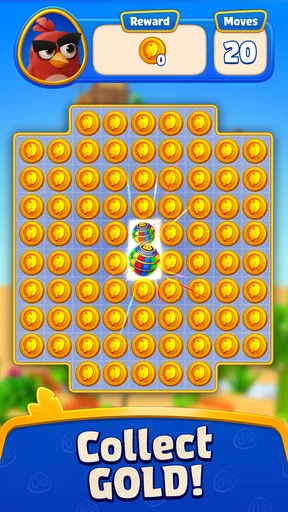
Angry Birds Match is the kind of casual game I can open for a few minutes without needing to learn a complicated system first. It combines familiar match-three play with the colorful Angry Birds cast, making it immediately approachable for anyone who enjoys short puzzle sessions. My first impression is that it works best as a light, easy-to-start game rather than as a demanding strategy experience.
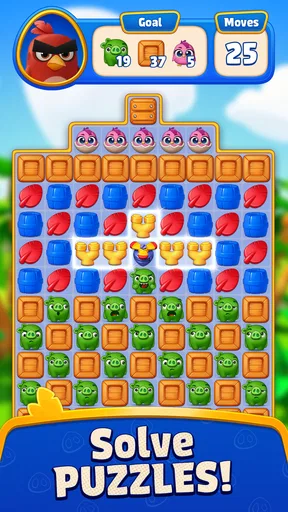
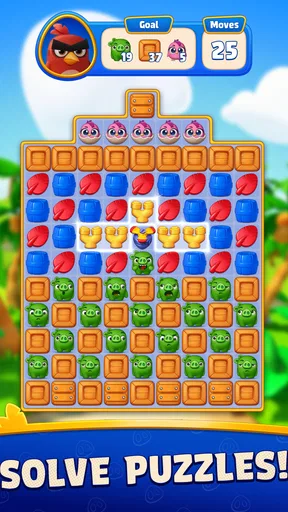
The basic appeal is simple: you match pieces, clear objectives, and move through bite-sized challenges while spending time with the flock. That simplicity is useful when I want something relaxing during a break, but it also creates the main question potential players should ask themselves: do you want a gentle puzzle game with a recognizable theme, or are you looking for deep planning and long-term complexity? This title clearly favors the first option.
How the current version feels to play
The current release is version 0.14.1, and the game is available as a free download for devices running OS 10 or later. Rovio Entertainment Oy is the developer, so the Angry Birds presentation is not being used as a random skin placed over an unrelated puzzle. The characters, tone, and visual identity are central to the experience, which gives the matching format more personality than a completely anonymous tile game.
I find the game most comfortable in short sessions. A quick round can fill an idle moment without demanding that I remember a large amount of information from the previous session. That makes it a natural fit for commuting, waiting rooms, or a quiet pause between tasks. It is also approachable for younger players, since the content rating is Everyone and the controls are easy to understand.
The casual category matters here. This is not the sort of game I would choose when I want a serious tactical challenge, a competitive multiplayer match, or a large role-playing system. Its strength is the low barrier to entry. I can pick it up, recognize the objective, and start making matches almost immediately. The trade-off is that players who need constant mechanical novelty may eventually find the familiar formula less exciting.
One useful habit is to avoid making the first available match automatically. I get better results by scanning the whole board before touching anything, especially when several possible moves are visible. Looking for matches that create space or set up a stronger follow-up is more satisfying than simply clearing the easiest group. Even in a relaxed game, that small pause makes the board feel more deliberate.
A good fit for short, low-pressure sessions
In an everyday situation, I could see myself opening it while waiting for food or taking a short break from work. I would play a few stages, stop before the session became repetitive, and return later without feeling that I had abandoned a complicated campaign. That rhythm is one of its strongest qualities. It respects the way many people actually use casual mobile games: in fragments rather than in long uninterrupted evenings.
Worth Reading Before You Choose

Baby Panda World Brings Quick Play to Modern Phones, but Its Game Library Feels Busy

ESPN’s Live Game View Makes Following Close Games Easier

QuizzLand Review: A Good Fit for Short Trivia Breaks, Not Every Player

Basketball Stars: Multiplayer Is Fast, but Can It Recover When Matches Go Wrong?

WEBTOON Turns Phone Updates Into a Better Reading Routine

Link to Windows Runs on Shared Habits, Not Social Feeds
The visual style also helps the game feel welcoming. Angry Birds has a recognizable cast, and that familiarity gives the board a warmer identity than a plain collection of colored shapes. For someone already comfortable with the franchise, the presentation may be enough to make a standard matching loop feel more inviting. For someone unfamiliar with the characters, the game still remains understandable because the puzzle rules do not depend on knowing the wider series.
My advice is to treat each move as part of a small plan rather than as a reflex. If the board offers a choice between a match that clears a few pieces now and one that opens a more useful area, I would usually examine the second option first. This is not a hidden control or a complicated technique; it is simply the kind of board awareness that prevents the game from becoming mindless.
What the release information tells existing players
The game was released on Jun 9, 2026, and the current version gives readers a clear point of reference when deciding whether to install it or return to it. For existing users, the most practical takeaway is that the title is still presented as a relatively early release rather than a long-established platform with years of accumulated systems. I would approach it with interest, but also with realistic expectations about how much depth a compact casual game may currently offer.
That distinction is important. A version number alone does not tell me that every part of the experience has been transformed, and I would not assume that a newer build automatically means a completely different game. What I can reasonably say is that the current build is the one to evaluate today, especially if someone previously tried an earlier release and is wondering whether it is worth another look.
For a returning player, the best way to judge the update is to compare how quickly the game gets back into its rhythm. If the familiar matching action still feels comfortable and the presentation remains appealing, the current build may be enough reason to continue. If the original issue was a lack of strategic variety, a version change by itself may not solve that concern. I would focus on the feel of the actual stages rather than expecting the release number to create a new genre.
The store presence shows an average rating of 4.8 from around 1.3 thousand ratings, with roughly 128 written reviews. Those figures suggest a very positive early response, but I would read them as an encouraging signal rather than a guarantee that every player will enjoy the same pace. Casual puzzle games are especially dependent on personal tolerance for repetition, visual style, and optional spending.
Where the free model changes the experience
The game costs nothing to start, which makes trying it straightforward. It also includes in-app purchases ranging from $0.99 to $99.99 per item. That range is worth noticing before playing, even if I intend to spend nothing. A free entry point is attractive, but the presence of optional purchases means I would set a personal boundary early, particularly if a child will use the device.
For me, the best approach is to decide in advance whether the game is entertainment I want to enjoy without spending or a hobby I am willing to support with purchases. Mixing those two attitudes can make a casual title feel more pressuring than it needs to be. If I choose the no-spend route, I would accept that progress may sometimes feel less immediate and avoid treating every obstacle as something that must be solved instantly.
This is also where the game may not be right for everyone. Players who dislike any free-to-play structure, even when the initial download is free, may prefer a paid puzzle game with a simpler purchase model. Likewise, anyone who finds match-three games repetitive should not expect the Angry Birds theme alone to change the underlying rhythm. The familiar characters improve the presentation, but they do not remove the basic repetition that defines the category.
A practical tip is to pause before using any limited assistance or purchase-related option. When I am playing quickly, it is easy to value immediate progress more than the overall session. Taking a moment to inspect the board can reveal a move I missed, and that habit keeps the puzzle itself at the center. It also helps separate genuine difficulty from a rushed decision.
How it compares with other casual puzzle choices
Compared with a plain match-three game, this title has a stronger identity because the Angry Birds world gives the activity a recognizable frame. That matters when I want a game with a little character rather than an interchangeable puzzle board. The advantage is emotional familiarity; the limitation is that players who prefer abstract puzzles may see the theme as decoration rather than a meaningful reason to play.
Compared with more complex puzzle games, it is easier to understand and less demanding to maintain. I do not need to commit to a long session or study an elaborate rule set before enjoying it. The downside is that it is unlikely to satisfy someone searching for deep systems, extensive customization, or a highly competitive experience. A more advanced puzzle alternative would be better for players who enjoy planning several turns ahead and learning complicated interactions.
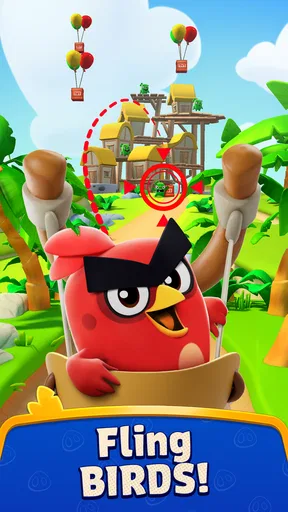
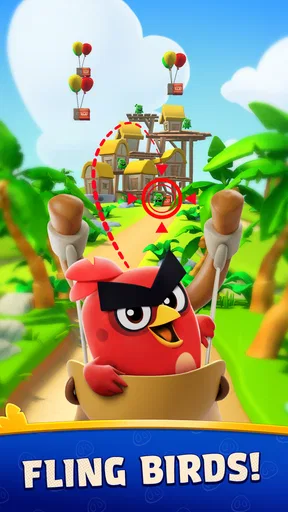
It also differs from action-focused Angry Birds games. If what I want is direct aiming, physics-based destruction, and the satisfaction of launching birds, this is not a substitute for that style of play. Here, the flock supports a matching game rather than turning the experience into an aiming challenge. That makes it calmer and more accessible, but also less energetic for fans who want the original action formula.
For families, the Everyone rating is reassuring as a broad content signal, but I would still pay attention to how purchases are handled on a shared device. For adults, the appeal depends more on tolerance for the free-to-play loop and the desire for short sessions. The game can work for both groups, but the reason to recommend it is different: children may enjoy the friendly characters, while adults may appreciate the quick, low-commitment format.
Small decisions that make the puzzle loop better
My first concrete recommendation is to scan for chain reactions before clearing an obvious match. A move that opens the middle of the board or brings more useful pieces into reach can be stronger than one that produces the largest immediate visual effect. This is especially helpful when the objective seems close but the board is becoming cramped.
My second recommendation is to use the edges carefully. Matches near the sides can be valuable when they remove awkward pieces, but they can also leave the center less flexible if chosen without a follow-up plan. I try to ask what the board will look like after the move, not only whether the current match is valid. That simple question adds a little strategy without making the game feel stressful.
My third recommendation is to stop while the game is still enjoyable. Because the rounds are easy to start, it is tempting to continue automatically. I get more value from it when I use it as a short break and leave before the familiar loop turns into obligation. This is a small but important trade-off: the game is strongest when it remains a pleasant choice, not a task I feel compelled to finish.
Another useful workflow is to separate experimentation from progress. When I am unsure how a board behaves, I would rather try a move during a relaxed session than make a hurried decision when I am focused on completing a stage. That approach makes failures less irritating and helps me notice which kinds of matches create better openings. The game does not need advanced theory to reward attention, but it does reward patience.
Who should install it, and who should skip it
I would recommend this game to someone who wants a friendly match-three experience with a familiar animated cast, simple controls, and sessions that fit around daily life. It is particularly suitable for players who enjoy gradually working through casual puzzles without needing a large story or a demanding competitive structure. The free starting price also makes it easy to test personally rather than relying only on the theme.
I would be more cautious about recommending it to someone who wants a completely purchase-free experience, a one-time paid game, or a highly original puzzle system. The in-app purchase range means families should consider device controls and spending expectations before handing it to a child. Players who quickly tire of repeated matching should also try it with modest expectations, because the Angry Birds presentation changes the mood more than it changes the core genre.
Existing fans of Rovio’s characters have a clear reason to give it a chance, but they should not expect the same experience as a traditional bird-launching game. The appeal here comes from combining the flock’s personality with a calmer board-puzzle routine. Whether that feels like a welcome variation or a disappointing departure depends on what the player wants from the franchise.
What I would watch as the game develops
Because the current release is still an early point in the product’s life, I would watch for how the puzzle variety develops over time. The most meaningful improvement would not simply be more stages; it would be keeping the matching decisions interesting enough that experienced players still have reasons to inspect the board carefully. Variety in objectives, layouts, or ways to approach a difficult board would help the game remain more than a familiar theme wrapped around a repeated action.
I would also pay attention to how the free model feels during longer use. A fair balance would let players enjoy the core loop at their own pace while keeping purchases genuinely optional. If progression begins to feel too dependent on spending, that would change my recommendation, especially for families and no-spend players. At present, I see the purchase range as something to approach thoughtfully rather than as a reason alone to dismiss the game.
The current install base is over 10 thousand, which gives the title an early community but not the scale of a long-established mobile giant. That makes the present moment useful for readers who like discovering a game before it becomes crowded with years of accumulated complexity. It also means I would judge it by the quality of the current experience, not by assumptions about a massive content library.
Overall, I see Angry Birds Match as a pleasant casual option with a clear personality and an accessible matching loop. Its strongest use case is a short, cheerful break; its weakest point is the familiar nature of the formula and the need to think carefully about optional purchases. With a 4.8 average and a free starting point, it is easy to justify trying, but I would recommend it most confidently to players who already know they enjoy match-three games.
My final advice is to approach it as a relaxed puzzle companion rather than as a major gaming commitment. Give the board a proper scan, make deliberate moves, and decide your spending limits before the first session becomes a habit. If that sounds like the kind of lightweight entertainment you want, the flock makes the format more inviting. If you need deep strategy, a fully paid model, or action-based Angry Birds gameplay, another choice will likely serve you better.
Pros
- Fun match-3 gameplay with familiar Angry Birds characters.
- Hundreds of levels provide plenty of content for casual players.
- Bright graphics and playful animations work well on mobile screens.
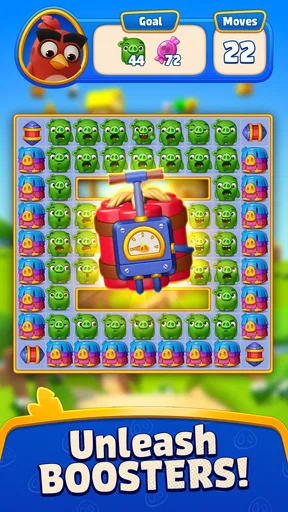
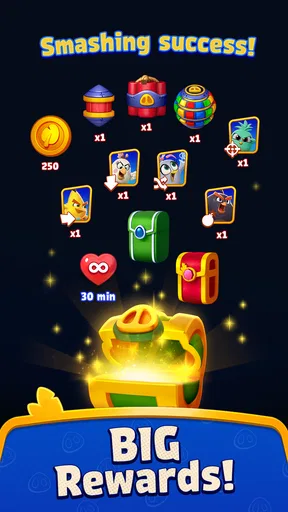
- Power-ups help clear difficult boards and keep matches exciting.
- Easy to learn
- making it suitable for players of different ages.
Cons
- Lives can run out quickly
- forcing pauses between attempts.
- Later levels may feel repetitive after extended play sessions.
- Some boosters and progress options encourage in-app purchases.
- Difficulty spikes can make certain stages frustrating without power-ups.
- Requires an internet connection for some features and updates.
FAQs for Angry Birds Match
What is Angry Birds Match, and how does the gameplay work?
Angry Birds Match is a colorful match-3 puzzle game set in the Angry Birds universe. You complete levels by matching three or more identical items, creating special combinations, and meeting objectives such as clearing obstacles or collecting specific objects. Successful matches help the hatchlings progress through different scenes, while familiar birds and characters add personality to the adventure.
Is Angry Birds Match free to download and play?
Yes, Angry Birds Match is generally free to download and play on supported Android and iOS devices. However, the game includes optional in-app purchases for items such as boosters, extra moves, or additional resources. You can make progress without paying, but difficult levels may encourage purchases. Parents should review device purchase settings before allowing children to play.
Does Angry Birds Match require an internet connection?
Many parts of Angry Birds Match may be playable without a constant internet connection, which is useful when traveling or using limited mobile data. Nevertheless, an internet connection can be required for updates, advertisements, cloud-related features, events, purchases, and certain online content. Availability may vary by version, device, and region, so offline functionality should not be assumed for every feature.
Are there advertisements or in-app purchases in Angry Birds Match?
Angry Birds Match can contain advertisements and optional in-app purchases. Ads may appear between levels or when you choose to receive rewards, while purchases can provide boosters, lives, coins, or other advantages. The game is still accessible without spending money, although waiting for lives or replaying challenging stages may be part of the free experience.
Is Angry Birds Match suitable for children, and what should parents know?
Angry Birds Match is designed with bright visuals, simple controls, and family-friendly cartoon characters, making it approachable for many younger players. However, parents should check the store rating, advertising content, privacy information, and available purchase options in their region. Because the game uses timed events and optional spending, parental controls are recommended for child accounts.


